
Musical Treats: Avinu Malkeinu Valley Beth Shalom – Yom Kippur 2026
“Avinu Malkeinu” – Kol Nidre, September 20, 2026


“Avinu Malkeinu” – Kol Nidre, September 20, 2026
Rav Blauer writes about the challenges of angst and cynicism that impede our capacity to fulfill complete yeshivah. He writes that the problem is not just contemporary; it is actually described in ancient texts. He cites Tosefta Bava Kamma, which states that the crime of stealing from the masses is greater than stealing from the individual. He extends the concept to the contemporary issues of keeping a library book indefinitely, or using an accessible parking space without the proper placard. These are seemingly innocuous acts since there is no clearly defined individual who is hurt. Yet, the victims are in fact knowable.
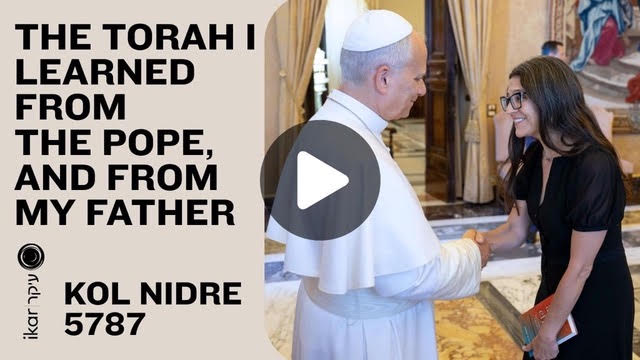
Rabbi Brous speaks of the Pope’s recent encyclical that incorporates a Dvar Torah on the Tower of Babel. The problem with the people who built the Tower of Babel is that they became uniform. The threat of AI is in fact related. The construction of the Tower of Babel is compared to the construction of the Second Temple and the walls of Jerusalem, led by Nehemiah when he returned from the Babylonian exile. The difference is that the people joined together in collaboration to create something special and productive, that did not compete with God.
Rabbi Krieger observes that while the Torah stipulates the requirement to observe a day of remembrance, it doesn’t provide any information about what we are remembering, or judgment, repentance, and prayer. He cites Rabbi Isaac Luria, who wrote that the first human was created on the first of Tishrei; that is what we are remembering.

Rabbi Sacks considers the actual meaning of Judaism – religion, culture, collection of commands…Actually, in his words, Judaism is a way of understanding the world and our place within it. Focusing on a single element, such as faith, is too narrow. He contrasts this with the famous statement from the Declaration of Independence: “We hold these truths to be self-evident…”. In fact, they are not self-evident. It is ideas that change the world.

Rabbi Gottlieb begins his commentary by stating that “Shana”, translated as “year”, come for the word “Shenui” – change. Rosh Hashanah therefore represents a “beginning of our change.” How we achieve this comes from listening – Shema. Change requires courage as well as kindness of heart, and we will be judged by both.

The application of the letters of “Elul” to various meanings related to this holy time. Rabbi Orenstein considers it as an acronym for Ani Ledodi Vedodi Li, from Song of Songs. In Song of Songs, God initiates the relationship. Yet at this time, we must initiate the relationship.
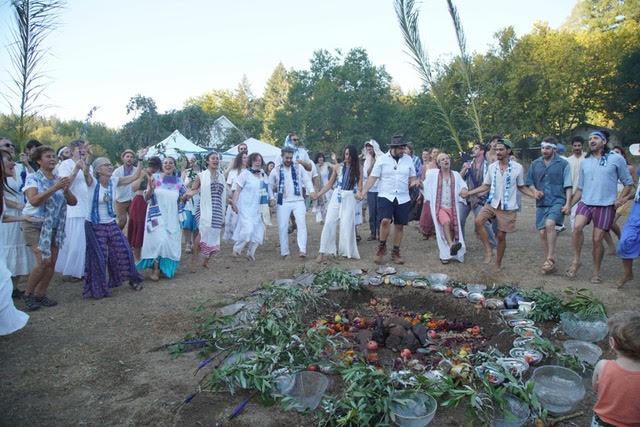
Maggid Golden relates the fall harvest and Rosh Hashana to the month of Elul. “Elul” means “harvest” in the Akkadian root, and “search” in the Aramaic root. Thus, this is the time for our deepest preparation for the coming days, reflection of the previous year, and lessons learned.
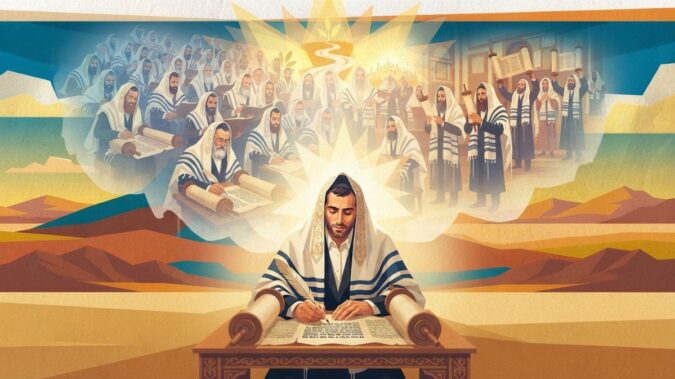
Rabbi Sacks references Deut. 31:10-13, emphasizing what Moses ultimately did during his last days: he established a protocol of reading the Torah out loud to the people, and ensuring that they are able to understand it. Later, King Josiah made this an annual hakhel. This ensured continued rededication to the mission.