
Chanukah Song Part 4
https://www.youtube.com/watch?v=6YSOZP_M6eM


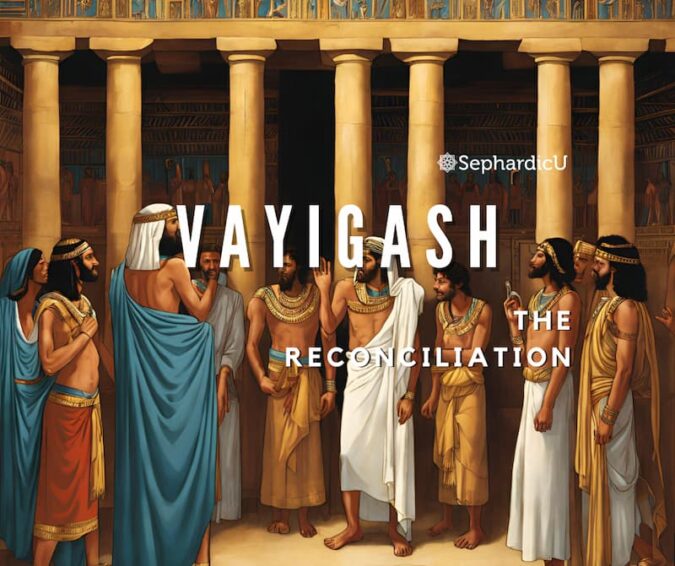
In the parasha, Judah pleads on behalf of his brother Benjamin, Joseph reveals himself to his brothers, Jacob travels to Egypt, and Joseph’s leadership of Egypt saves lives while converting all Egyptians into bondmen.

Rabbi Sacks writes that in the parashah, Joseph is the object of the actions of others—the hurtful acts by his brothers against him, the actions of Potiphar’s wife–rather than his own. In contrast, the actions that are his—dreaming, running Potiphar’s house, interpreting the dreams of others—are attributed explicitly to God. In this way, Joseph is a unique figure in the Tanakh. The few times when he tried to control his own fate backfired. This is a paradox.

Rabbi Sacks summarizes an essay by Rabbi Saul Berman on the meaning of the 3 times the verb Vayigash is used in the Tanakh: when Abraham hears of God’s intention to destroy Sodom and Gemorrah, when Joseph claims Benjamin as his personal slave, and when Elijah confronts the 450 prophets of Baal.

Why is Jacob the father of our people when it was Abraham who started the journey, Isaac with his supreme faith, Joseph who saved the clan from famine, Moses the great leader…Most of our image of Jacob comes from Midrash, which views the narrative in black and white. Rabbi Sacks cites Deuteronomy 4:25, “when you have children and grandchildren, and have been established in the land for a long time, you might become decadent;” namely, Israel must never forget its past.

Rabbi Stillman writes of Jacob’s legitimate fear of Esau, considering the unjustness of his treatment towards his older brother. Yet, when they encounter each other, they reaffirm their humanity and their relation of the divine.

Rabbi Barenblat understands the wrestling between Jacob and “the angel” as a metaphor for life’s challenges and injustices, which may leave us with permanent injuries. She cites Kedushat Levi, which describes the name Israel as “moral and ethical” as well as “a mind turned toward God.” The name change from Yaakov to Israel represents a profound internal change, from “heel” to “God consciousness

Cantors Laurie Akers, Rachel Brook, Rachel Goldman

Rabbi Spiro challenges the classic commentaries that seek to justify Jacob’s clearly unfair interaction with Esau by establishing a basis for Esau’s fault. She extends this tendency to contemporary living, wherein we tend to overstate the faults of our enemies or understate their values.

Why did Isaac love Esau, when Rebecca had been told by God that the younger son would prevail, while the older son would serve him? According to Rashi and the Magic of Dubnow, Esau knew how to deceive Isaac, letting his father think that he was strictly religious in asking about tithes.