Poem by Rachel Barenblatt
Poem written in my parked car outside the synagogue waiting for the bomb squad to sweep the building again


Poem written in my parked car outside the synagogue waiting for the bomb squad to sweep the building again
Chaplain Leslie Klipstein is a staff chaplain at Providence St. Joseph Hospital in Burbank, CA.

In this week’s parashah, Joseph can no longer conceal his identity and escape his past. He does this by asking first, “Is my father still well?” Instead of starting with condemnations of his brothers. This indicates Joseph’s new capacity to be true to himself.
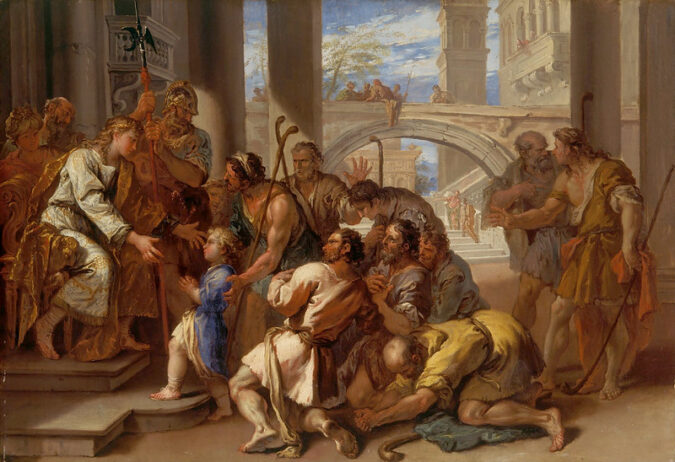
In this week’s parashah, Joseph can no longer conceal his identity and escape his past. He does this by asking first, “Is my father still well?” Instead of starting with condemnations of his brothers. This indicates Joseph’s new capacity to be true to himself.

The Maccabeats – We’re Still Here (Am Yisrael Chai) – Hanukkah 2023 – עם ישראל חי


Rabbi Sacks writes that the root of human conflict is actually sibling rivalry: Cain and Abel, Isaac and Ishmael, Jacob and Esau, and now Joseph and his brothers. He compares the sibling rivalry of the Torah to the 3 Abrahamic religions, Judaism, Christianity, and Islam. He reminds us of the early medieval period in Spain, when the religions lived together peacefully. That changed with the blood libels and expulsions later in Europe. Rabbi Sacks continues the analogy into the present, writing of the conflicts in the Middle East right now.

Rabbi Ruditsky ties the parashah to current events in Israel. While many Jewish people have questioned their past, like Joseph, they are now coming to terms with both the present and the past, recognizing that they are intertwined. Joseph named his one of his sons Manasseh, which means “God has made me completely forget my hardship and my parental home.” Like Joseph, many Jews today question their position on the State of Israel.

Rabbi Tuling writes about Jacob’s resiliency; he goes to sleep destitute, using a rock as a pillow. He wakes up with a dream of blessing and divine promise, which gives him hope to continue his journey. She describes Jacob as passive, rather than deceptive and tricky—he allows his mother to manipulate him and Laban to take advantage of him. How does he rise about family patterns?
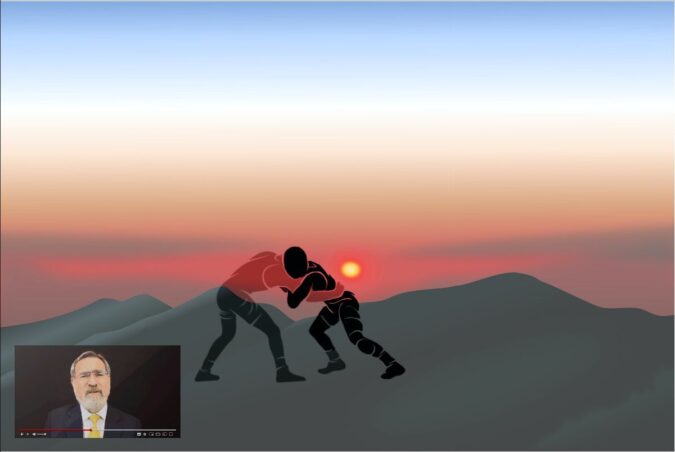
Jacob is first described as a simple man, yet he is not at all simple. While Midrash portrays him as “all-good” and Esau as “all-bad”, Jacob tricked his brother and, with his mother, deceived his father. Later, Laban deceives him on his wedding night. The deception continues, yet Jacob became rich. Please follow the link below to read Rabbi Sacks’ perspective on who Jacob was: