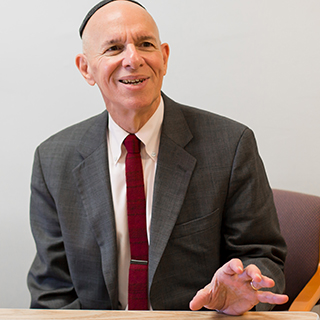

Rabbi Daniel Nevins: Behar-Bechukotai Remember the Land

Rabbi Nevins writes that the capacity for humanity to ruin and be exiled from the earth was found millennia ago, in this Torah portion. In Leviticus, the land is a central character, even more so than the Sanctuary. In Leviticus 26:42, the text reads “…and I will remember the Land”, giving it a status similar to the 3 patriarchs. The Land is not just a place to live, but an intermediary to encounter God.

Liora Ramati: Emor

Liora Ramati writes that the verb daber is reiterated 3 times, for present, future, and past. The reason is that Moses was instructed to command the kohanim about impurity in a whisper; the priests must be able to direct their hearts when blessing Israel. The Kohanim were held to a higher standard of holiness than the rest of the community.

Professor Raymond Scheindlin: Adhere Mot – Kedoshim How to be Holy

Professor Scheindlin comments on Chapter 19 of Leviticus, which comes with a temporary reprieve from the endless ritual instructions, and begins with the statement “Be holy, for I, the Lord your God, am holy.” He is concerned with the difference between the commandment to “be holy”, rather than “to be moral”. Furthermore, the Torah commands us to beware of the holy, as with Nadav and Avihu.

Rabbi Sacks-Mintz: Tazria – Metzora

Rabbi Mintz writes that, despite post-biblical and contemporary thought, judgments of impurity that are affiliated with “uncleanness”, or “sinfulness” related to the chata’at are not in accordance with the text. In fact, tuma’a is not connected to demonic forces, nor dirt or infection, but simple nature; tangible realities of the human condition juxtaposed with the Divine.