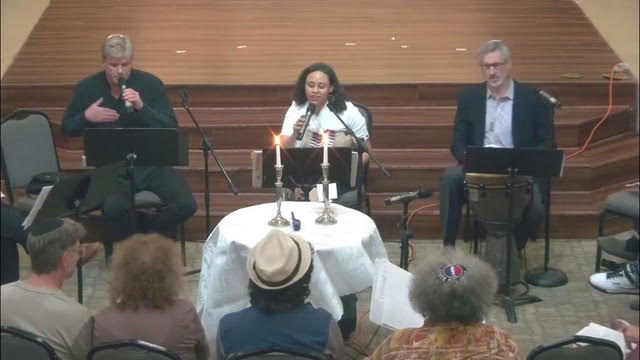
B’simcha Tamid by Cantor Jackie Rafii
performed by Cantor Jenni Asher and Roger Treece


performed by Cantor Jenni Asher and Roger Treece

Rabbi Lowenstein discusses the spiritual essence of the water in this parashah—an element so precious and vital to our lives that we could not survive for more than a few days without it. Please follow the link below to hear his focused statement on not taking our water for granted:
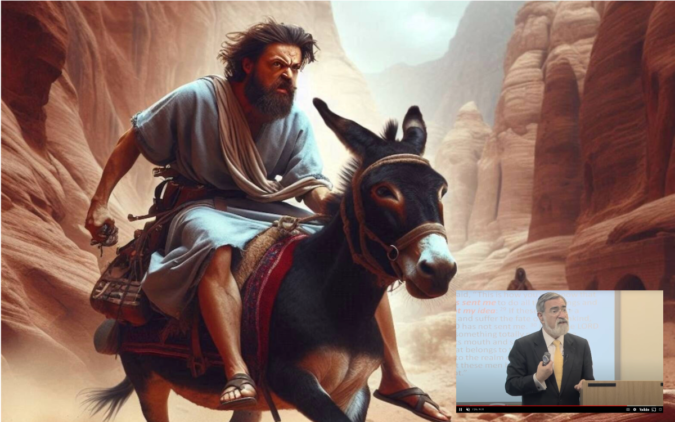
Rabbi Sacks explores the concepts of “aloneness” vs “set apart”. One can lead to leadership and vision, whereas the other, “aloneness”, leads to delegitimization and anti-semitism.

Emotion is more critical than reason in the choices that we make. However, most of our emotional intelligence is in our subconscious. This is the logic of the chukim, which seemingly make no rational sense, including such statues as the prohibition of sowing mixed seeds together, or mixing wool and linen, or meat and milk. Considering contemporary neuroscience, these laws are designed to bypass the rational brain, establishing instinctive behavior patterns to counteract dark emotional drives in the mind.

Dr. Mantell takes a different approach to Moses’ reaction to the rebellion. Moses’ response of “falling on his face” is a reflection of his humility and selflessness, while turning to God to resolve the matter. Korach is distinguished from Moses in his total lack of humility; his dispute was not “for the sake of heaven”.

Rabbi Sacks questions Moses’ reaction to the threat of rebellion: In their rebellion, the people had nothing to lose; they were never going to leave the desert and enter the Promised Land. But, a good leader needs to distinguish between the role and the self. Moses, however, took the rebellion personally two times. He allowed himself to be provoked by Korach. This reaction was a sign of his personal failings.

“Korach said we’re all holy, but he really meant: I want more power for me and those who are like me.” Rabbi Barenblat references Pirkei Avot 1:12: “Be like the students of Aaron: loving peace and pursuing it.” This tradition refers to the pursuit of shalom (peace) and shleimut (wholeness). Because Aaron pursued shalom and shleimut, his staff flowered, while Korach’s staff did not.

Rabbi Sacks writes of the vast discrepancy between the perceptions of the 10 spies and the 2—Caleb and Joshua. He explains the guilt of the former as an attribution error – assuming that others (the Canaanites) saw them as they did themselves—like grasshoppers. They were entitled to see themselves as very small, but not to attribute that to others. Why did Caleb and Joshua not make the same mistake?

The mitzvah of Challah is given immediately after the narrative of the 12 spies. The root for challah is the same as for ‘appease’ – as Moses appeased Hashem. The mitzvah is presented in this order as a sign of appreciation of the yield of the land, something that the spies lacked.

Rabbi Wolintz-Fields writes of the lessons learned in this parashah. First, to be a leader requires one to stand firm, alone if necessary, to maintain what you believe to be true. Second, the definition of an assembly is 10 people.