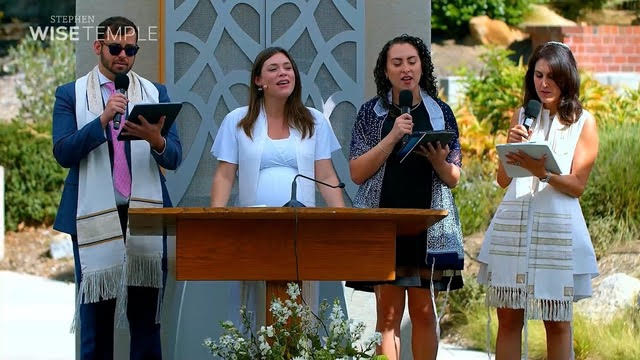
Elohai Netzor
Senior Cantor Emma Lutz, Cantor Tannoz Foruzanfar, and cantorial interns Andrew Paskil and Lauren Roth with music director Tali Tadmor and the Stephen Wise Temple band
Elohai Netzer:


Senior Cantor Emma Lutz, Cantor Tannoz Foruzanfar, and cantorial interns Andrew Paskil and Lauren Roth with music director Tali Tadmor and the Stephen Wise Temple band
Elohai Netzer:

Please check out the exciting video of Cantor Rachel Goldman of Congregation Beth Yeshurun:

Rabbi Ruditsky addresses the concepts of sacred time and sacred space in Vayakhel-Pekudei, represented by the completion of the Mishkan for God to be present, and the mitzvah of observing Shabbat – a holy time coinciding with a holy space.

Hamilton Passover Parody
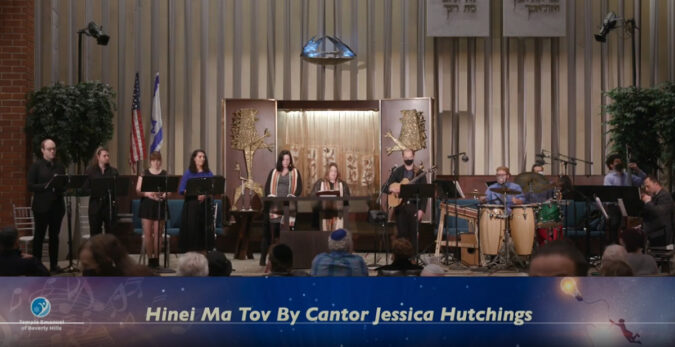
Cantor Lizzie Weiss and others from Temple Emanuel

Rabbi Ruditsky writes about the beauty of human creativity and the partnership with God in constructing the Mishkan.
Rabbi Buchwald addresses insights regarding the Tabernacle, as addressed in Truman, Tetzaveh, Vayakhel, Pekudei, and part of Ki Tessa. He cites Moses Mendelssohn, who wrote about the full array of human creativity, craftsmanship, and skills involved in the building of the Tabernacle, without which no community can survive.
One of the most famous phrases in the Torah makes its appearance in this week’s parsha. It has often been used to characterise Jewish faith as a whole.

The Purim story is relevant to American Jews today in the themes of charges of dual loyalty, and marriage outside of Judaism. Contemporary political leaders continue to argue that Jews can’t be trusted if they are loyal to Israel and the threat of assimilation is ongoing.

Chaplain and Cantorial Soloist Mitzi Schwarz has joined the Jewish Community of Ojai clergy staff.