
Rabbi Adam Ruditsky: Parashat Va’et’chanan
Rabbi Ruditsky writes about seeing versus hearing, as depicted in the Shema, and links it to Tisha B’Av, where we mourn the impact of words said and their outcome.


Rabbi Ruditsky writes about seeing versus hearing, as depicted in the Shema, and links it to Tisha B’Av, where we mourn the impact of words said and their outcome.

Parashat Devarim introduces themes relating to wisdom in leadership, rather than power and authority, and the uniqueness of Israel that is based on the valuable teaching they received rather than any superiority to others. Please open the attached document to read a study guide for discussions based on several known commentaries:

Rabbi Sacks cites Deut 34:7, which states that Moses’ ‘eye was undimmed and his natural energy was unabated’ at the age of 120. He never lost his youthful idealism, and his passion for justice and the responsibilities of freedom. Instead of reminiscing in his old age, he turns to generatively, and the keeping of meaning.

Rabbi Ruditsky writes about the power of words, as in the importance of vows at the end of Numbers, and the nature of words at the beginning of Deuteronomy. Words are our primary medium of communication, and have power for both good and bad.

Rabbi Copnick’s article, written a few years ago, is surprisingly relevant today in a post-COVID world that has come to embrace zoom technology. Please follow the link below to read her article:

The daughters of Tzelophehad claimed their rights as individuals, rather than as a group. Yet individualism is also synonymous with chaos. Thus, the tribes as a society formed the organizing principle of Judaism. Therefore, their rights were offset by the tribal rights of the male relatives.

Rabbi Sacks asks the question: Why did Moshe’s prayer for a successor appear here, instead of 7 chapters earlier, when God informed him that he would die in the wilderness? He identifies the first clue—if the daughters of Zelophechad could inherit, then why couldn’t his sons? The second clue is that he wanted to die like Aaron, whose sons inherited his position.

Rabbi Ruditsky writes that while the parashah, at first glance, focuses on societal order, it is substantially concerned with vows and oaths. Rabbi Ruditsky explains these as personal declarations of self-affirming choices, whose power rests in the commitment and integrity of the one making the affirmation.
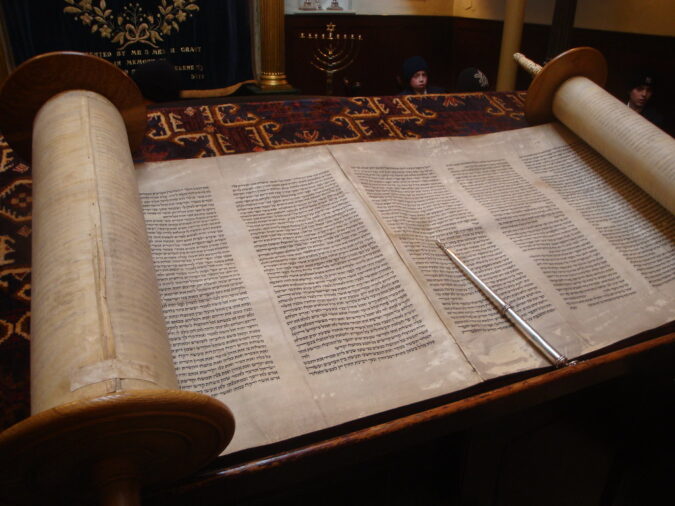
Rabbi Ruditsky writes about the various concepts of ownership–both of land and of Torah.

Imagine if Cinderella were a panic-stricken college student, laboring at the last hour to compose a term paper on the portrayal of women in 19th-century literature.